(2025). Accelerated DESPOT1 with variable parameters for 3D T1 brain mapping. Journal of Magnetic Resonance Imaging.
Welcome.
I am a doctoral candidate at the Institute for Biological and Medical Engineering (IIBM) at UC Chile, working at the Center for Biomedical Imaging (CIB) and the Millennium Institute for Intelligent Healthcare Engineering (iHEALTH).
My work sits at the intersection of physics (Magnetic Resonance Imaging), scientific computing (Julia & Python) and artificial intelligence (Deep Learning & Optimization). I specialize in MRI simulations, sequence design, and optimization, but I also have experience in Computer Vision, Brain-Computer Interfaces, and Engineering Education.
I always welcome collaborations, questions, or just a chat about science, code, or anything in between. Beyond academics, I enjoy photography, music, web development, coffee brewing, and gluten-free baking. Feel free to reach out.
Trajectory • Origins & Milestones
Short Bio
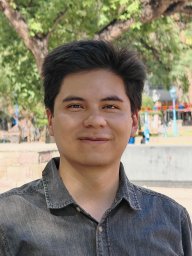
Originally from Bolivia, I served as a full-time university lecturer and researcher at Universidad Católica Boliviana (UCB) before joining the Institute for Biological and Medical Engineering (IIBM) at UC Chile, working at the Center for Biomedical Imaging (CIB) and the iHEALTH Millennium Institute in Santiago, Chile.
Beyond traditional research, I am deeply invested in interdisciplinarity, open science, collaboration, and knowledge sharing. I program extensively in Julia and Python. I contribute actively to MRI Together and CAMERA from ESMRMB, the ISMRM Latin American Chapter, and the IEEE P2731 Working Group on Brain-Computer Interfaces Unified Terminology.
In industry and technology transfer, I have worked on embedded systems and full-stack solutions (Natural Bolivia), data science (Entel PCS), and enterprise AI assistant development with multi-agent LLM evaluation at Generadora Metropolitana, alongside NLP initiatives at Bci. I also participate as a co-founder and architecture lead at Recursa Labs, where we build applied AI solutions, cloud architectures, and intelligent workflows.
Articles & Explorations
Blog
Interactive scientific essays, MRI physics explorations, and open-source computational notebooks with live in-browser simulations.
Education
Selected Teaching & Contributions
IMAGINE Summer School 2026
Co-instructor and contributor to open-source hands-on low-field MRI education, basic physics, Bloch simulations, and Halbach array scanner design with CAMERA and ESMRMB.
Explore IMAGINE Workshop Site ↗Teaching Assistant at UC Chile
Pontificia Universidad Católica de Chile
- Biomedical Engineering Laboratory: Biomedical imaging, temporal biosignals, and biology microscopy.
- Deep Learning: Practical course covering deep learning fundamentals, architectures, and biomedical applications.
- Advanced Signal Processing: 2D signal processing techniques including stochastic modeling and Fourier analysis.
- Mathematical Methods for Biomedical Engineering: Linear algebra, optimization, and numerical methods.
- Magnetic Resonance Imaging Laboratory: MRI physics, pulse sequence design, and image reconstruction.
iHEALTH AI Summer/Winter School
Millennium Institute for Intelligent Healthcare Engineering (2024–2026)
- Practical Workshop - Introduction to AI: Hands-on training covering Multilayer Perceptrons (MLP) and Convolutional Neural Networks (CNN) with PyTorch and Colab notebooks.
Mechatronics Engineering
Universidad Católica Boliviana 'San Pablo' • Undergraduate courses
- Introduction to Mechatronics: Foundational principles of mechatronic system design, covering multidisciplinary integration of mechanical, electrical, and computer engineering with hands-on projects using Arduino and LEGO Mindstorms kits.
- Electronic Measurements and Components and Lab.: Operation, characterization, and testing of passive and active discrete electronic components, signal conditioning circuits, and experimental error analysis using laboratory instrumentation, tailored across multidisciplinary engineering cohorts, including chemical engineering students.
- Analog Electronics and Lab.: Design, mathematical modeling, and analysis of analog circuits, covering BJT and MOSFET transistor stages, operational amplifiers, active filter design, and frequency response, combining SPICE simulation with hands-on hardware prototyping.
- Circuits I Lab.: Practical laboratory experiments in DC circuit analysis covering Ohm's and Kirchhoff's laws, nodal/mesh methods, Thévenin and Norton equivalents, and transient responses, coordinated across multiple course sections (paralelos) with collaborative, project-based experimentation.
- Circuits II Lab.: Hands-on laboratory experiments focused on operational amplifier (OpAmp) topologies, active linear and non-linear circuit configurations, feedback analysis, signal conditioning, and practical circuit testing.
- Robotics Lab.: Practical implementation of robotic systems, covering forward and inverse kinematics, actuator and servo control, trajectory planning, sensor integration, and computer vision-based practices for visual feedback and robotic guidance.
- Servomechanisms Design: Design, modeling, and numerical simulation of electromechanical servomechanisms, covering actuator selection, transmission dynamics, experimental system identification, discrete-time control, PID tuning, and Lyapunov stability analysis for precision motion control.
- Mechatronics Design: Comprehensive project-based design course integrating mechanical structure, embedded hardware, sensor/actuator interfacing, and firmware architecture into functional multidisciplinary mechatronic prototypes.
- Computer Vision: Core algorithms and principles of computer vision, covering spatial and frequency-domain image processing (including 2D Fourier transforms), feature extraction, filtering, and segmentation, implemented through interactive Jupyter Notebooks with classical and deep learning approaches.
- Degree Workshop: Advising and technical supervision of undergraduate engineering graduation projects, evaluating technical reports, organizing departmental milestone progress workshops, and serving on evaluation committees to guide and assess students' final oral defenses.
Biomedical Engineering
Universidad Católica Boliviana 'San Pablo' • Graduate courses
- Biomaterials: Structure, characterization, and clinical applications of metallic, ceramic, polymeric, and composite biomaterials, focusing on host-material interactions, biocompatibility, biodegradation kinetics, tissue engineering scaffolds, and regulatory evaluation.
- Biomedical Device Design: Translational design and development of medical technologies through structured clinical problem definition and engineering methodologies—including design thinking, iterative spiral design, and concurrent engineering—integrating prototyping validation and consideration of regulatory frameworks.
Mechatronics Engineering
Universidad Católica Boliviana 'San Pablo' • Graduate courses
- Neural Networks: Theoretical foundations and practical implementation of artificial neural networks, covering multilayer perceptrons, backpropagation dynamics, loss optimization, regularization techniques, convolutional architectures (CNNs), and deep learning workflows implemented in Python.
- Advanced Topics in Machine Learning: Exploration of advanced machine learning paradigms, focusing on unsupervised techniques (such as clustering, ICA, and PCA), ensemble learning, generative modeling, and physics-informed neural networks (PINNs) applied to engineering systems.
- Introduction to Machine Learning: Foundational principles of machine learning, comparing supervised, unsupervised, and reinforcement learning paradigms, covering core predictive models, introductory neural networks, end-to-end data pipelines, evaluation strategies, and real-world engineering applications.
Extra lectured courses
Universidad Católica Boliviana 'San Pablo' • Course
- Applied Multivariate Analysis: Multidimensional data analysis rooted in applied linear algebra and matrix decompositions, covering Singular Value Decomposition (SVD), Principal Component Analysis (PCA), Independent Component Analysis (ICA), factor analysis, and discriminant techniques for high-dimensional datasets.
- Neural Networks for Computer Vision: Specialized course on neural network architectures for visual perception, starting from developing multilayer perceptrons (MLPs) from scratch, advancing through convolutional neural networks (CNNs), transfer learning, recurrent neural networks (RNNs), multimodal systems, and semantic and instance segmentation.
- LaTeX: Comprehensive training in scientific typesetting with LaTeX, covering document structuring, complex mathematical typography, bibliography management with BibTeX and Mendeley, automated table/figure formatting, thesis styling, and presentation creation with Beamer using TeXstudio and Overleaf workflows.
Research & Papers
Publications
Peer-reviewed journal articles, conference proceedings, and recent conference presentations.
2025 ▾
2024 ▾
(2024). Distributed edge computing for appearance-based gait recognition. IEEE ANDESCON.
2023 ▾
(2023). Frost Forecast and Early Alarm System based on Deep Learning. Proceedings of the 2023 IEEE Latin American Conference on Computational Intelligence (LA-CCI).
(2023). Exploring microgravity liquid printing based on resin solidification for outer space applications. Key Engineering Materials.
(2023). Structure of personal values and corruption: An experimental analysis of decisions leading to accepting or rejecting bribery. Revista AJAYU.
2022 ▾
(2022). ADRAS: Airborne Disease Risk Assessment System for Closed Environments. Proceedings of the 9th International Conference on Information Management and Big Data (SIMBig).
(2022). Merging Brain-Computer interface P300 speller datasets: perspectives and pitfalls. Frontiers in Neuroergonomics: 36.
(2022). MAMBU: A Bolivian case of response to artificial ventilators shortage. IEEE ANDESCON.
2021 ▾
(2021). Exploring Edge Computing for Gait Recognition. 4th International Conference on Bio-Engineering for Smart Technologies (BioSMART), IEEE.
(2021). A protocol for Brain-Computer Interfaces based on Musical Notes Imagery. IEEE Latin American Conference on Computational Intelligence (LA-CCI).
(2021). A functional BCI model by the P2731 working group: control interface. Brain-Computer Interfaces.
(2021). A Functional BCI Model by the P2731 Working Group: Transducer. Brain-Computer Interfaces.
(2021). A functional BCI model by the P2731 working group: psychology. Brain-Computer Interfaces.
(2021). A Functional Model for Unifying Brain Computer Interface Terminology. IEEE Open Journal of Engineering in Medicine and Biology.
(2021). Towards Bridging the Gap Between Computational Intelligence and Neuroscience in Brain-Computer Interfaces with a Common Description of Systems and Data. Frontiers in Neuroinformatics.
2020 ▾
(2020). Cross-View Gait Recognition Based on U-Net. 2020 International Joint Conference on Neural Networks (IJCNN), Glasgow, United Kingdom.
2019 ▾
2018 ▾
(2018). Gait recognition based on modified Gait energy image. IEEE sciences and humanities international research conference (SHIRCON).
(2018). Implementation Issues of Student-Centered Learning based Engineering Education in Developing Countries Universities. World Engineering Education Forum & Global Engineering Dean Council.
(2018). Blockchain and Peace Engineering and its Relationship to Engineering Education. World Engineering Education Forum & Global Engineering Dean Council.
(2018). Implementación de la Metodología SUM Modificada para el Desarrollo de Videojuegos Orientados al Aprendizaje en Bolivia. Memorias de la Décima Séptima Conferencia Iberoamericana en Sistemas, Cibernética e Informática: CISCI.
(2018). BLDC Motor Controller Response to PWM Compensation. CLCA 2018 Proceedings.
2017 ▾
(2017). A Comparison of SOBI, FastICA, JADE and Infomax Algorithms. Proceedings of the 8th International Multi-Conference on Complexity, Informatics and Cybernetics, Orlando, US.
Get in Touch
Connect
Feel free to reach out for collaborations, questions, or just a chat about science, code, or anything in between.
Academic & Code
- Email: gsahonero [at] uc {dot} cl
- Google Scholar: Research Profile & Citations
- ORCID: 0000-0001-5259-7927
- GitHub: @gsahonero
- ResearchGate: Guillermo Sahonero
Social & Creative
- LinkedIn: Guillermo Sahonero Alvarez
- Threads: @thepolygongs (Photography & Creative)